
Love what you drive? Start your upgrade with handcrafted carbon fiber parts and accessories, precision-built for performance, style, and individuality.
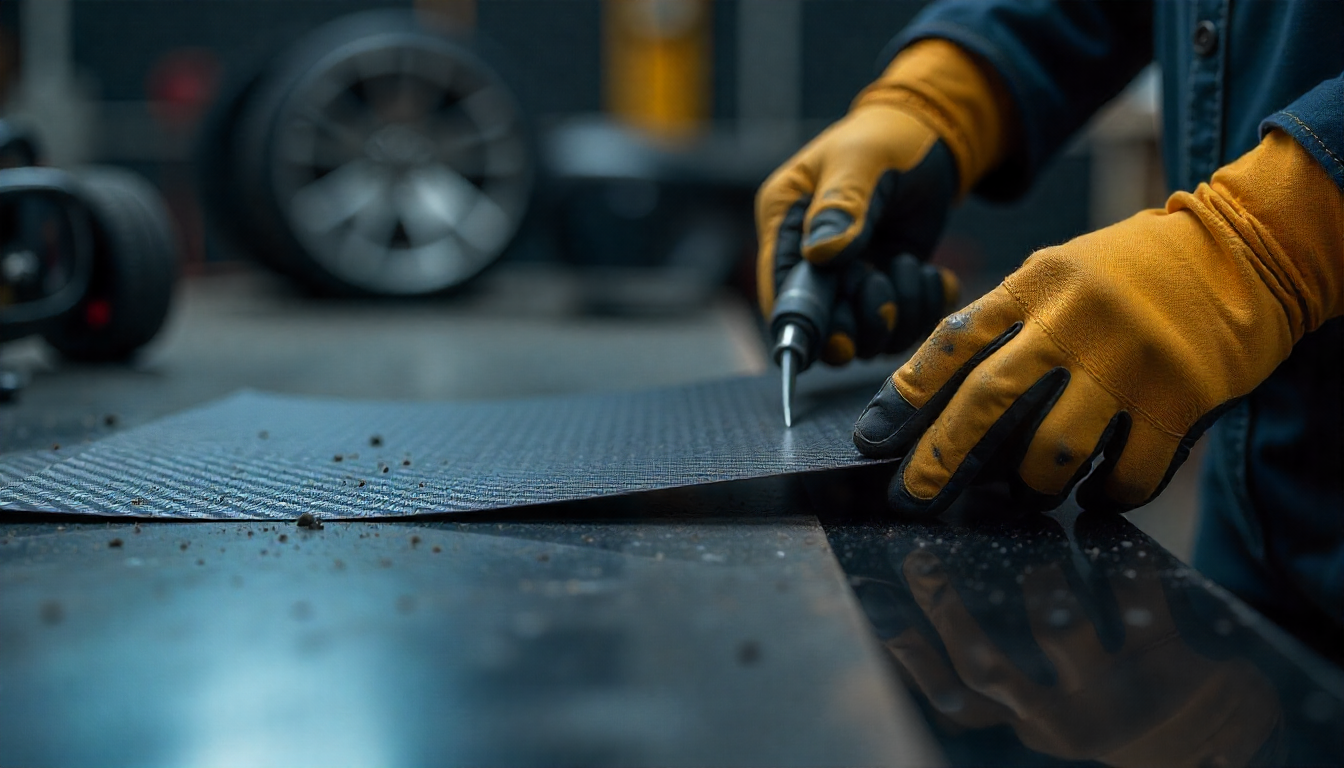
If you’ve ever held a piece of handcrafted carbon fiber in your hands—smooth, lightweight, and almost otherworldly in its precision—you know why it’s treasured in the world of high-performance cars. But behind every sharp edge and sleek contour lies a crucial question many of our customers ask: is it hard to cut carbon fiber?
Cutting carbon fiber can be challenging, but it’s definitely achievable with the right tools and precautions. The material’s unique properties—its strength, brittleness, and anisotropy—require specific techniques to ensure clean, safe, and accurate cuts. Whether you’re shaping a piece for a custom carbon fiber steering wheel or making modifications to one of our premium carbon fiber license plate frames, understanding how to cut carbon fiber correctly is key to protecting both your tools and your results.
Key Takeaways
- Cutting carbon fiber is difficult due to its abrasive and brittle nature.
- Specialized tools like diamond-coated blades or CNC routers are essential.
- Carbon fiber dust is hazardous; proper PPE and ventilation are critical.
- Using a backing material can help prevent splintering and delamination.
- Wet cutting or dust extraction systems reduce airborne particles.
- Slow, steady cuts protect both the material and the blade.
- Finishing and sealing the edges ensure durability and aesthetic quality.
Why is cutting carbon fiber challenging?
Abrasive properties of carbon fiber
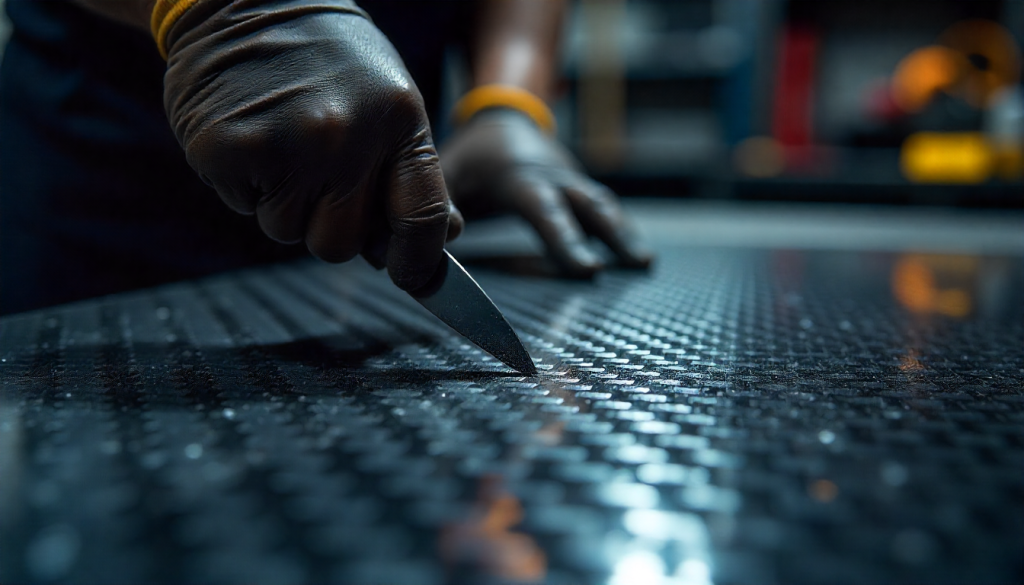
Carbon fiber is incredibly strong and abrasive. When you cut it, especially in layered carbon fiber automotive parts, the material quickly wears down ordinary tools. Steel blades will dull after just a few cuts. That’s why at Exotic Carbon Fiber, we use industrial-grade equipment designed specifically for precision and longevity.
Brittleness and delamination risks
Carbon fiber composites are made from layered fibers in a resin matrix. Improper cutting can lead to delamination, where these layers separate, or splintering at the edges. This is particularly concerning in thin, intricate designs such as custom carbon fiber accessories like money clips or valve stem caps.
Hazardous dust
Cutting carbon fiber generates a fine black dust that is not only irritating to the skin, eyes, and lungs, but also electrically conductive. This dust can cause shorts in electronic equipment nearby, a crucial consideration when working around high-end vehicles.
Heat buildup during cutting
High friction during cutting generates heat, which can soften the resin matrix. This leads to distortion, inaccurate dimensions, and a poor surface finish. Heat-sensitive operations should be avoided without proper cutting speeds and blade types.
Anisotropy of carbon fiber
Because carbon fiber is anisotropic, its strength and stiffness vary depending on the fiber direction. Improper cutting orientation can compromise the structural integrity of parts like carbon fiber dashboard trim or carbon/Kevlar custom finishes.
Choosing the right tools for cutting carbon fiber
Basic tools by thickness
| Thickness | Tool Options |
|---|---|
| Up to 0.5mm | Sharp scissors or razor blades |
| 0.5mm – 3mm | Carbide blades, Dremel with cutting wheels |
| 3mm and above | CNC router, waterjet cutter, diamond-coated saw blades |
Best tool recommendations
- Carbide or diamond-coated blades: These offer longevity and cleaner cuts. Ideal for larger handcrafted carbon fiber pieces.
- CNC routers: Provide unmatched accuracy. Used in our performance car customization processes.
- Waterjet cutters: Minimize dust and heat, making them perfect for cutting complex shapes in premium carbon fiber components.
- Dremel or angle grinder: For small cuts or edge detailing, especially in personalized carbon fiber accessories.
Safety first: Protective measures when cutting
Personal Protective Equipment (PPE)
- Respirator mask or high-quality dust mask
- Safety goggles
- Nitrile gloves or cut-resistant gloves
- Long-sleeved cotton clothing
- Hearing protection when using power tools
Ventilation and dust control
- Work in a well-ventilated garage or workshop
- Use shop vacuums or downdraft tables to collect fine dust
- Wet cutting techniques can be useful for minimizing airborne dust
Protecting sensitive electronics
Always move laptops, phones, and other devices away from the work area. Carbon fiber dust is conductive and can cause irreparable damage to electronics. At Exotic Carbon Fiber, all cutting operations are isolated from electronic systems.
Techniques for clean, precise cuts
Secure the workpiece
Clamp your carbon fiber part firmly to your workbench. Movement during cutting can ruin precision and cause splintering.
Go slow and steady
Let the blade do the work. Applying too much force can increase heat and risk delamination. This is especially important when working on detailed pieces like carbon fiber key fobs and gifts or carbon fiber interior mods.
Use a backing material
Place a rigid foam or wood backing under the carbon fiber. This reduces backside splintering and supports the material throughout the cut.
Finishing the edges
After cutting:
- Sand edges using progressively finer grits (start around 150 grit and finish with 600+).
- Use a file for tight corners.
- Seal the edges with epoxy resin to protect against fraying and to maintain the high-end look you expect from luxury automotive accessories.
When precision matters: Why professionals choose Exotic Carbon Fiber
Every piece we craft—from custom carbon fiber steering wheels to UV resistant carbon fiber license plate frames—is cut using advanced machinery and finished by hand. We do this not only to maintain the visual integrity of each piece but also to ensure structural excellence. That’s why customers trust us for aftermarket carbon fiber upgrades that balance durability, performance, and style.
The difference between ordinary and extraordinary is attention to detail. That’s what sets handcrafted carbon fiber apart from mass-produced alternatives.
With over 750 products in our catalog and support for over 95 exotic and performance car models, we make sure each cut reflects our commitment to precision and passion.
Real-world applications: Products that require expert cutting
- Carbon fiber money clips: Small yet detailed, require micro-cutting precision.
- Titanium wheel bolts and aluminum wheel spacers: Often paired with carbon fiber trim for performance upgrades.
- Carbon fiber cigar holders: Where aesthetics and edge finish matter as much as structural strength.
- High-end car accessories: Complex geometries that require a combination of CNC and hand finishing.
FAQs
Can I cut carbon fiber at home?
Yes, but only if you follow strict safety guidelines. Use the right tools, wear PPE, and have good ventilation. DIYers should start with smaller projects like carbon fiber valve stem caps.
What is the best blade for cutting carbon fiber?
Diamond-coated blades or carbide blades are ideal. They resist wear and deliver clean cuts even through dense, layered material.
Is carbon fiber dust dangerous?
Yes. It can irritate the lungs and skin and damage electronics. Always wear a respirator and ensure proper dust extraction.
Why does carbon fiber splinter when I cut it?
Improper blade type, direction of cut, or excessive force can cause splintering. Use a backing material and take slow, consistent passes.
Should I seal the cut edges?
Absolutely. Sealing with epoxy protects the exposed fibers and maintains the product’s structural integrity and sleek appearance.
Final thoughts
Cutting carbon fiber may seem daunting at first glance, but it’s a manageable task with the right knowledge and tools. Whether you’re modifying your own parts or exploring our vast selection of made in USA carbon fiber products, understanding the cutting process empowers you to appreciate the craftsmanship behind every curve.
At Exotic Carbon Fiber, we’re more than a brand—we’re your collaborators in performance, style, and precision. If you’re looking for carbon fiber repair services or want to bring your vision to life with custom carbon fiber accessories, our team is here to guide you at every step.
Visit our product catalog or learn more about how our custom design process works.
Get inspired. Get precise. Get exotic.
By: Exotic Carbon Fiber Editorial Team
Disclaimer: This blog post is for informational purposes only and should not be considered professional advice.