
Love what you drive? Start your upgrade with handcrafted carbon fiber parts and accessories, precision-built for performance, style, and individuality.
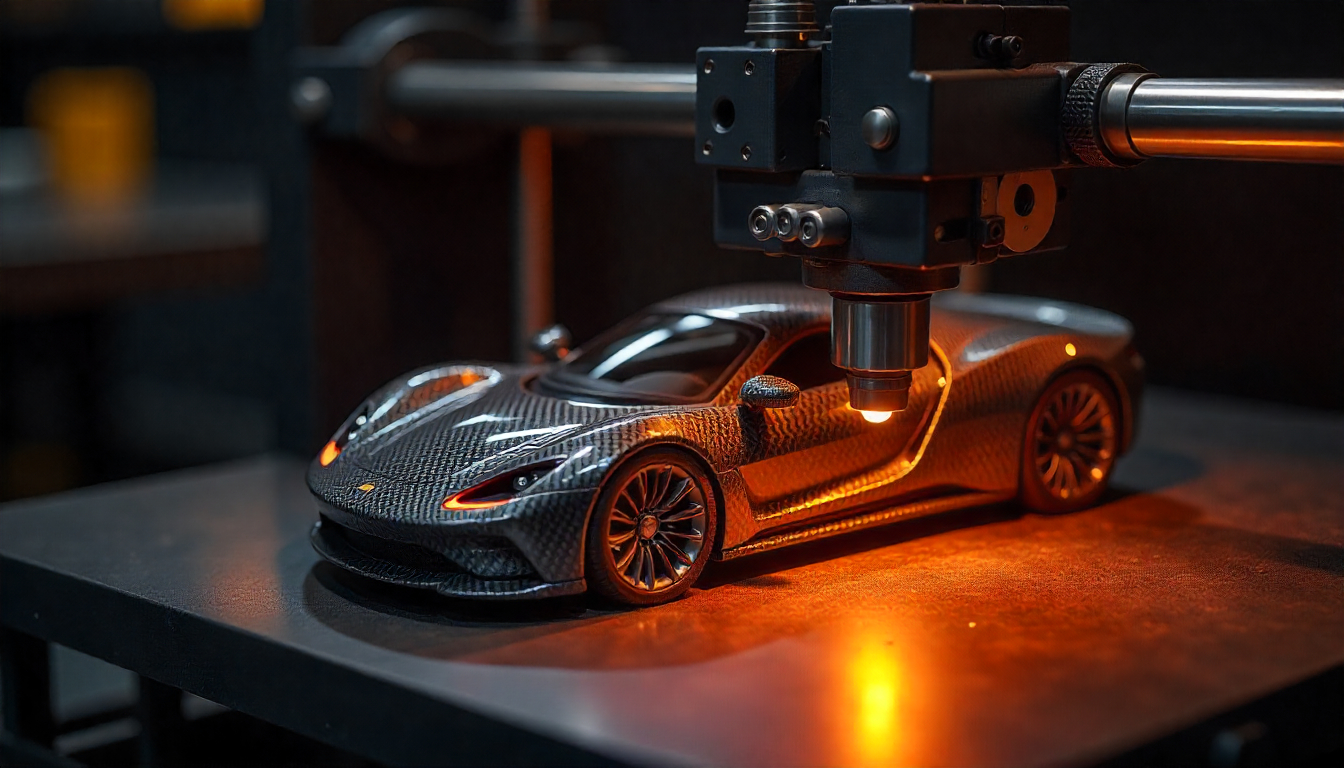
When you hold a handcrafted carbon fiber part in your hands—lightweight, strong, and beautifully finished—it feels like the future of performance and design. That’s why the idea of 3D printing carbon fiber excites so many enthusiasts. The short answer is yes, you can 3D print with carbon fiber, but the process is more complex than working with standard plastics like PLA or ABS. There are two main approaches: using chopped carbon fiber filament or continuous carbon fiber filament. Each method opens the door to innovation in custom carbon fiber accessories, luxury automotive upgrades, and lightweight car performance components.
Key Takeaways
- Yes, you can 3D print carbon fiber using chopped or continuous filament methods.
- Chopped carbon fiber filaments are more accessible and enhance strength, stiffness, and heat resistance.
- Continuous carbon fiber fabrication creates parts with strength comparable to traditionally molded carbon fiber.
- Specialized nozzles and printers are often required due to the material’s abrasive nature.
- 3D printed carbon fiber components are lighter and stronger than standard plastics, ideal for performance car customization.
- The process aligns with the trend of personalized carbon fiber accessories and aftermarket carbon fiber upgrades.
- Exotic Carbon Fiber, with its handcrafted and made in USA carbon fiber products, complements these cutting-edge innovations.
Can you 3D print carbon fiber with chopped filament?
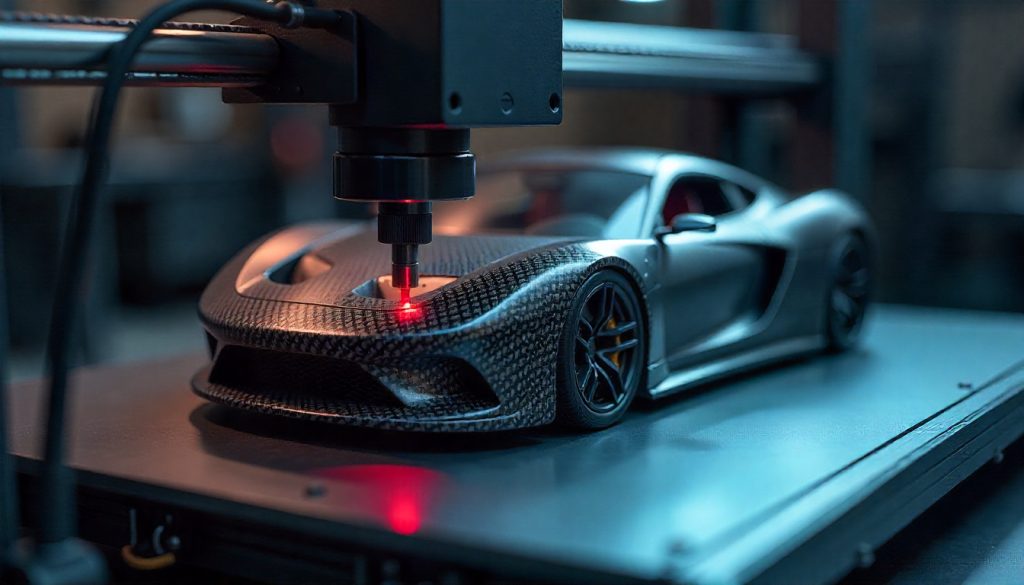
Yes, and this is the most common way enthusiasts and engineers explore 3D printed carbon fiber. Chopped carbon fiber filament consists of short fibers—less than a millimeter in length—mixed into a thermoplastic such as nylon, PLA, or PETG. The result is a filament that offers enhanced strength, stiffness, and thermal stability while staying lightweight. Compared to plain plastics, it resists warping and delivers superior dimensional accuracy.
However, these filaments are highly abrasive. If you’re printing chopped carbon fiber car parts or carbon fiber interior mods, a standard brass nozzle won’t survive long. To handle the wear, hardened steel nozzles or ruby-tipped nozzles are recommended. Additionally, using a larger nozzle diameter (0.5mm or more) helps prevent clogging when working with chopped carbon fibers.
Benefits of chopped carbon fiber filament
- Increased rigidity compared to plain plastic filaments.
- Lightweight performance ideal for carbon fiber automotive parts.
- Heat and warp resistance.
- More affordable and widely available than continuous fiber solutions.
Limitations of chopped carbon fiber filament
- Not as strong as continuous fiber reinforcements.
- Nozzle wear due to abrasive fibers.
- Requires specific printer setups.
Continuous carbon fiber filament: strength on another level
For exotic car carbon fiber parts that demand a high strength-to-weight ratio, Continuous Fiber Fabrication (CFF) is the answer. Unlike chopped fiber, this process involves reinforcing the part with long, continuous strands of carbon fiber. A dual-nozzle system extrudes the thermoplastic shell with one nozzle while the second lays continuous fibers precisely where reinforcement is needed.
This creates parts with directional strength comparable to traditionally molded carbon fiber sheets. Imagine printing a custom carbon fiber steering wheel insert or structural carbon fiber dashboard trim with reinforcement exactly where forces are applied. This precision allows designers and engineers to achieve both lightweight car performance upgrades and unmatched durability.
Benefits of continuous carbon fiber printing
- Superior strength-to-weight ratio.
- Directional reinforcement tailored to stress points.
- Potential to rival molded handcrafted carbon fiber.
Challenges of continuous carbon fiber printing
- Requires specialized printers.
- Costlier than chopped fiber filaments.
- Design must account for directional reinforcement.
Table: Comparing chopped vs continuous carbon fiber printing
| Feature | Chopped Carbon Fiber Filament | Continuous Carbon Fiber Filament |
|---|---|---|
| Fiber Length | Short (less than 1mm) | Long, continuous strands |
| Strength | Higher than plastic, but moderate | Comparable to molded carbon fiber |
| Cost | Lower | Higher |
| Accessibility | Widely available | Requires specialized equipment |
| Best Use | Lightweight automotive accessories | Structural and performance parts |
Why 3D printing carbon fiber matters for automotive enthusiasts
In the world of exotic and performance cars, every gram matters. Whether it’s custom carbon fiber license plate frames, UV resistant carbon fiber interior mods, or performance car customization with titanium wheel bolts and aluminum wheel spacers, weight reduction and strength are central to design. 3D printing allows us to prototype and even produce certain high-end car accessories faster and more precisely.
At Exotic Carbon Fiber, our handcrafted carbon fiber components are already trusted by owners of Ferrari, Lamborghini, Porsche, McLaren, and Mercedes-Benz. Integrating 3D printed carbon fiber methods into design workflows offers additional flexibility and personalization. For instance, carbon fiber key fobs and gifts, personalized carbon fiber accessories, or even carbon fiber cigar holders can be prototyped quickly before final production in premium carbon fiber finishes.
A closer look at personalized carbon fiber accessories
Performance cars are deeply personal, and so are the accessories we design for them. The ability to 3D print carbon fiber accelerates the journey from concept to reality. Imagine creating custom carbon/Kevlar custom finishes for a client who wants a one-of-a-kind carbon fiber money clip or UV resistant dashboard trim. 3D printing gives designers more room to experiment while still honoring the handcrafted quality that Exotic Carbon Fiber is known for.
How Exotic Carbon Fiber supports innovation
Being a direct U.S.-based supplier, Exotic Carbon Fiber delivers handcrafted carbon fiber automotive parts without hidden fees or inflated costs. Our carbon fiber repair services also extend the lifecycle of existing parts, proving that sustainability and luxury can go hand in hand. We don’t just sell high-end car accessories—we invite customers to collaborate in their design journey. This transparency and dedication are what set us apart.
As 3D printed carbon fiber becomes more refined, our expertise in premium carbon fiber components ensures that performance, style, and exclusivity remain uncompromised.
A perspective worth considering
“Technology should enhance craftsmanship, not replace it. 3D printing with carbon fiber adds a new tool to the artisan’s workshop, but the soul of luxury still lies in the handcrafted finish.”
FAQs about 3D printing carbon fiber
Is 3D printed carbon fiber as strong as traditional carbon fiber?
Not always. Chopped carbon fiber filaments are stronger than standard plastics but weaker than molded carbon fiber sheets. Continuous carbon fiber printing, however, can produce parts with comparable strength when designed correctly.
Do I need a special printer to 3D print carbon fiber?
For chopped carbon fiber filaments, many mid-range printers work if upgraded with a hardened steel nozzle. Continuous carbon fiber fabrication requires specialized printers with dual-nozzle systems.
Can I use 3D printed carbon fiber for automotive parts?
Yes, particularly for lightweight accessories and aftermarket carbon fiber upgrades. However, structural components should use continuous carbon fiber reinforcement for maximum strength.
Does Exotic Carbon Fiber use 3D printing?
Our core offerings remain handcrafted carbon fiber car parts made in the USA, but we continuously explore advanced methods like 3D printing to support prototyping, customization, and customer collaborations.
What are some examples of 3D printed carbon fiber applications?
Prototype custom carbon fiber steering wheels, carbon fiber license plate frames, carbon fiber dashboard trims, carbon fiber valve stem caps, and even carbon fiber cigar holders can all benefit from this technology.
Final thoughts
So, can you 3D print carbon fiber? Absolutely—and it’s transforming how we think about automotive luxury, performance, and personalization. While chopped carbon fiber filament offers accessibility, continuous carbon fiber fabrication unlocks structural potential once reserved for traditional molding. At Exotic Carbon Fiber, we celebrate this innovation while remaining true to our roots in handcrafted carbon fiber, made in the USA. Whether you’re looking for carbon fiber repair services, aftermarket carbon fiber upgrades, or personalized carbon fiber accessories, the journey is as much about precision and performance as it is about style.
For more insights into our handcrafted approach, explore our collection of custom carbon fiber steering wheels and discover how premium carbon fiber components elevate your driving experience.
By: Exotic Carbon Fiber Editorial Team
Disclaimer: This blog post is for informational purposes only and should not be considered professional advice.